

Orignal Author
Yi-Heng Sung
English Translator
Yi-Heng Sung
Copyright© LIS情境科學教材

Before thermometers were invented, the concept of temperature was highly abstract. The temperature was something you could "feel" but not "see". Therefore it was difficult to describe temperature. In 16th-century Europe, where thermometers didn’t yet exist, temperature descriptions were based on subjective comparisons rather than objective measurements. For example, people judged whether something was hot or cold by touching it, relying on their own sensations. However, because human body temperature varies, the same object could feel different to different people. For instance, someone who had stayed in a warm room might find a room-temperature metal pot slightly chilly, while someone standing under heavy snow for a while might find the same pot pleasantly warm.
Galileo Galilei (1564–1642), born in Pisa, Italy, was the eldest of six siblings. His father was a musician who often questioned authority, who might instill a healthy skepticism in young Galileo. In 1581, following his father’s wishes, Galileo entered the University of Pisa to study medicine. However, his curiosity extended beyond medicine to physics and other fields. By 1592, he became a professor of mathematics at the University of Padua, where he also taught geometry, mechanics, and astronomy, showcasing his versatility.
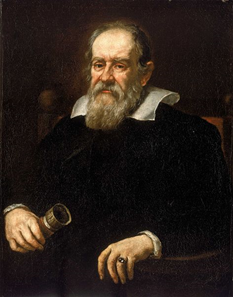
During Galileo’s time, Aristotle’s theories dominated the understanding of nature and science. Heat and cold were considered fundamental properties that couldn’t be measured. For example, fire was thought to be hot and dry, while water was cold and wet. The idea of quantifying temperature hadn’t emerged yet. However, as medicine advanced, the need to measure temperature became more apparent.
At the University of Padua, Galileo encountered new ideas and read Johannes Hasler’s De Logistica Medica (1578). Hasler introduced a standardized table for assessing body temperature, inspired by the Roman physician Claudius Galen’s concept of dividing human temperature into eight levels (ranging from -4 to +4). Hasler combined this with factors to create a diagnostic chart. However, the method was still based on touch, with doctors comparing a patient’s temperature to their own sense of what was normal.
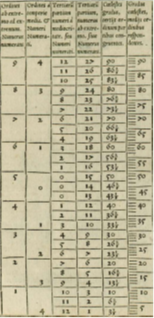
Galileo observed that this tactile method was inherently flawed. Human body temperature fluctuates slightly depending on various factors, meaning a doctor’s judgment could vary depending on their own temperature. This subjectivity made accurate temperature measurement impossible.
The idea of using air volume to gauge temperature wasn’t entirely new. Ancient Greek scientists had noticed that air expands when heated. In his Pneumatica, Heron of Alexandria (10–70 BCE) described this principle and used it to design devices like temple doors that opened automatically when heated. However, many ancient texts were lost during Europe’s medieval period. It wasn’t until the Renaissance that Heron’s work was rediscovered and published in Latin in 1575. Galileo studied Heron’s experiments and saw their potential.
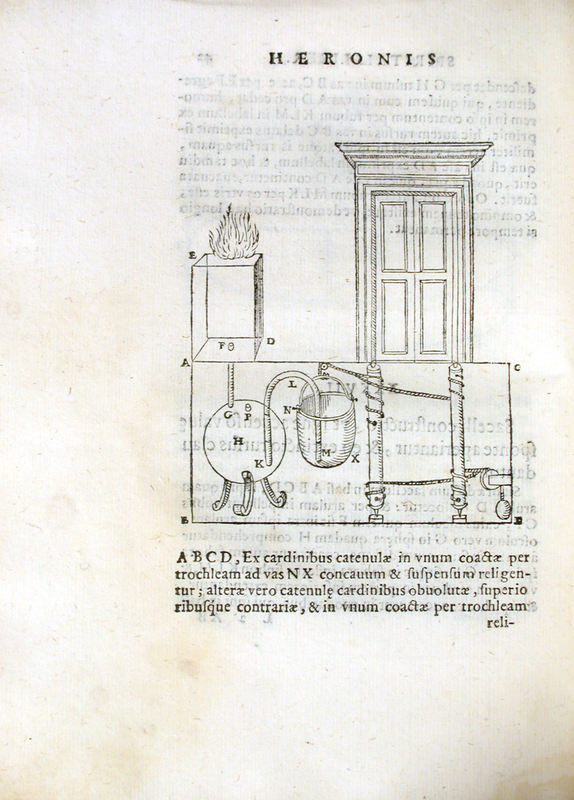
Inspired by Heron, Galileo realized that temperature changes could be objectively observed by measuring the expansion and contraction of air. He modified Heron’s designs, creating a device that could measure a patient’s temperature by observing the volume of air in a sealed tube. When the air expanded, the patient’s temperature was higher; when it contracted, the temperature was lower.
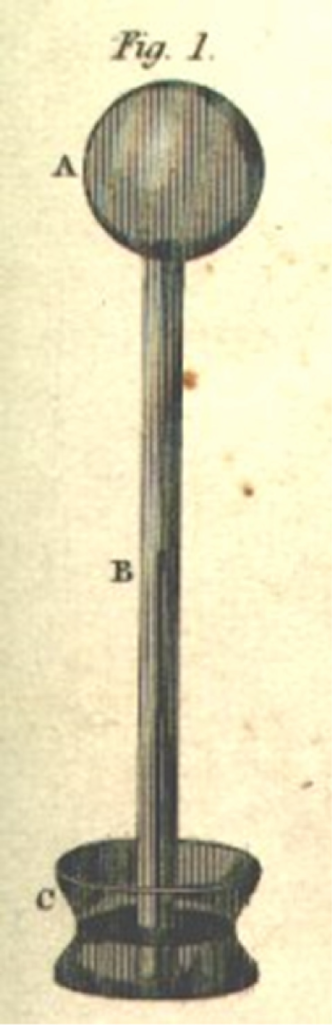
Galileo wasn’t the only one inspired by Heron’s works. Many European scientists of the time began experimenting with thermometers.
While Galileo’s thermoscope marked a revolutionary step in temperature measurement, it had its limitations. It wasn’t very precise and lacked a standardized scale. A colleague of Galileo’s at the University of Padua, Santorio Santorii, improved the design by adding a scale, allowing temperatures to be quantified for the first time.

Despite Santorii’s improvements, early thermometers varied widely in design and materials, leading to inconsistent measurements. Moreover, producing identical thermometers was costly and technically challenging. Therefore, the measurement across different thermometers still could not be compared. For better scientific development, Robert Boyle of the Royal Society proposed standardizing temperature scales by defining fixed reference points. Scientists could then use these points to ensure consistent comparisons across different thermometers.
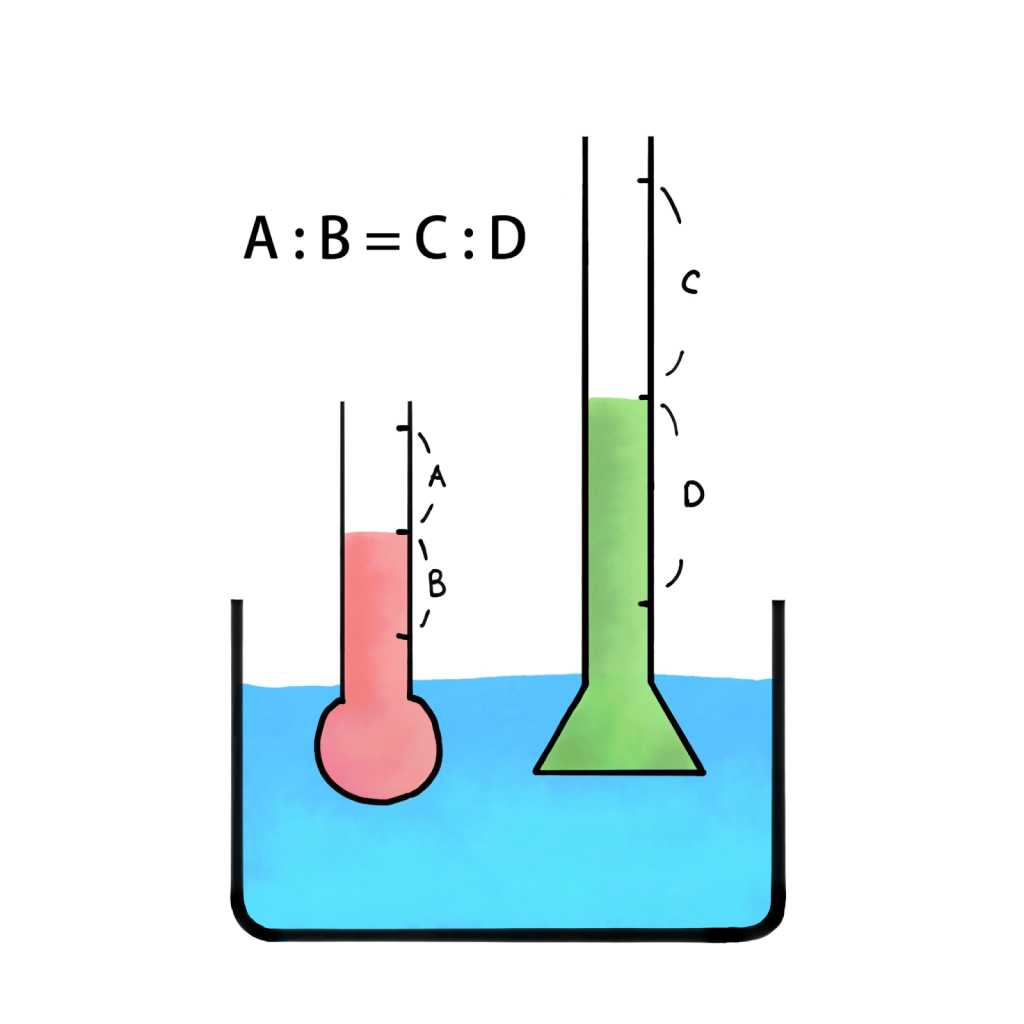
Debate ensued for over a century about which reference points to use. Proposals included freezing and boiling points of water or melting snow and peak summer heat. In the 18th century, Daniel Gabriel Fahrenheit and Anders Celsius developed the Fahrenheit and Celsius scales, respectively. Fahrenheit initially defined 0°F as the lowest temperature he could produce (a mixture of salt, ice, and water), 32°F as water’s freezing point, and 96°F as the average human body temperature. Anders Celsius initially set 0° for boiling water and 100° for freezing water, later reversed by Carl Linnaeus into today’s Celsius scale.

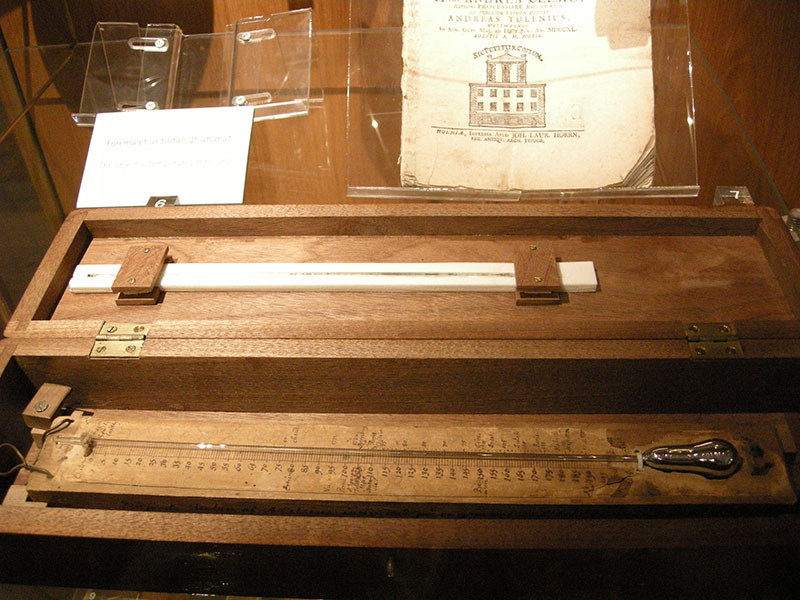
The invention of the thermometer revolutionized scientific research. For example, in 1622, Robert Boyle used an improved thermometer in experiments that led to Boyle’s Law. Additionally, large-scale climate surveys became possible. The influential Medici family funded the Medici Network, which recorded Europe’s climate from 1654 to 1670 using 26 identical thermometers.
Although Galileo’s initial thermometer was crude, its invention had an immense impact on science and daily life—perhaps more than he ever imagined!
Got a thought, a project, or just want to say hi? I’d love to hear from you!