

April 28, 2025
Yi Heng Sung


A hand-illustrated alternative travel map created to bridge the information gap between hotel staff and international tourists in the Netherlands. Designed with both charm and function in mind, the map features local recommendations, cultural insights, and practical travel tips—helping visitors explore beyond typical tourist spots while enjoying a more authentic and comfortable experience.
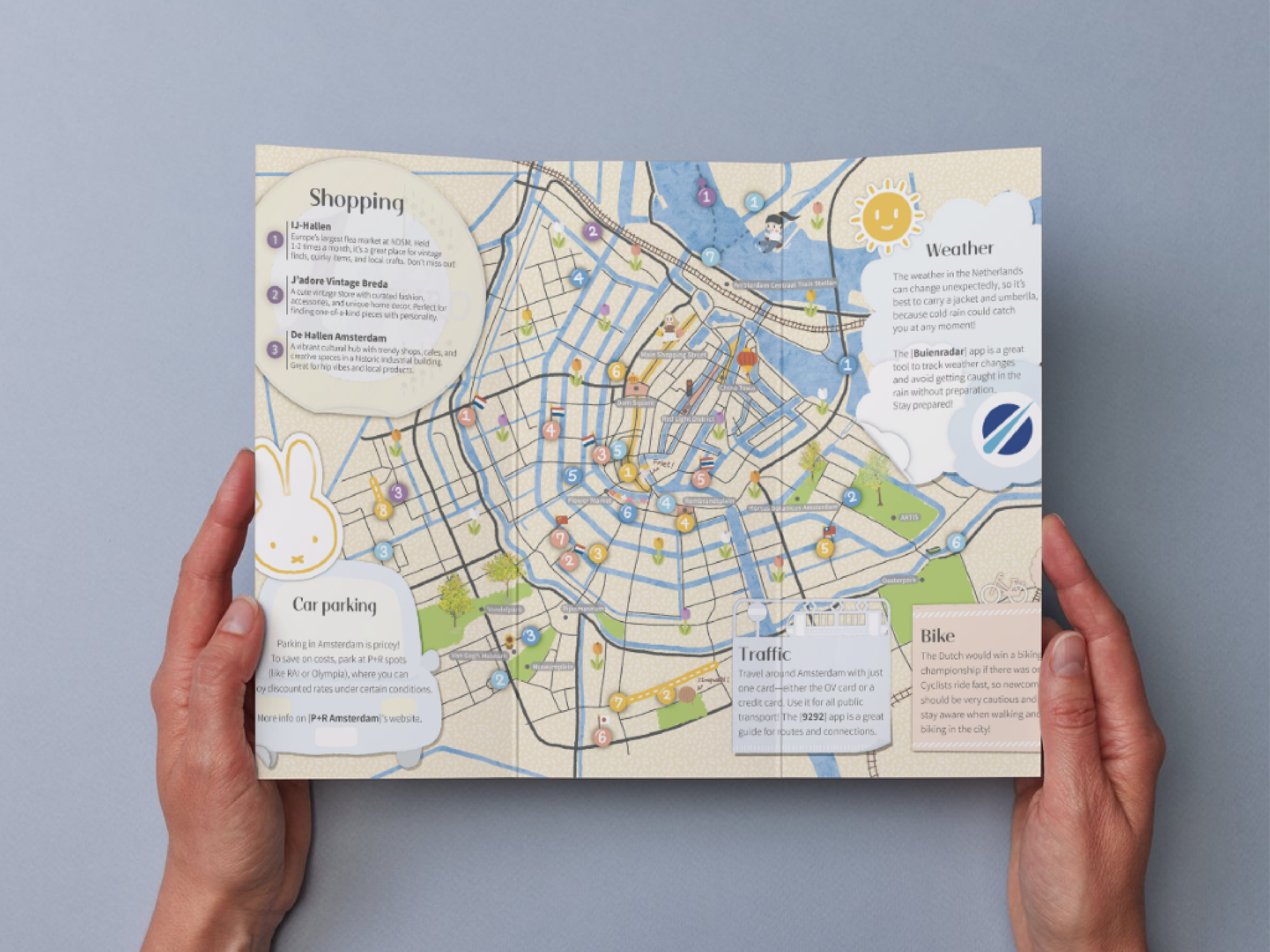
This is a self-initiated project aimed at addressing the gap in practical information between tourists and hotel reception staff in the Netherlands. Many travelers, upon arriving in the city, often ask about where to find good food, authentic Dutch cuisine, how to get around, and which lesser-known but interesting spots to visit. However, most of the free tourist maps available in hotels are ad-driven and overly commercialized, offering limited practical value and often failing to meet visitors' real needs.
To solve this, I designed an “Alternative Amsterdam Travel Map” focused on local experiences and hidden gems. It not only helps tourists explore the city's culture more deeply, but also makes it easier for hotel staff to recommend destinations that better match guests’ expectations. The map uses a folded A4 leaflet format—compact and easy to carry, yet rich in content. One side features handpicked restaurants, snacks, activities, and museums, while the other shows a central city map marking both suggested locations and well-known landmarks, allowing travelers to plan their routes by area. Helpful travel tips, such as weather info, transport guidance, and useful apps, are also included along the sides to enhance the user experience.
#Content Creation #Illustration #Map Design #Creative Content #Tourism Content #Visual Communication #Content Strategy #Audience Targeting #Infographic Design #Localization Strategy #Cultural Storytelling #SelfInitiated Project
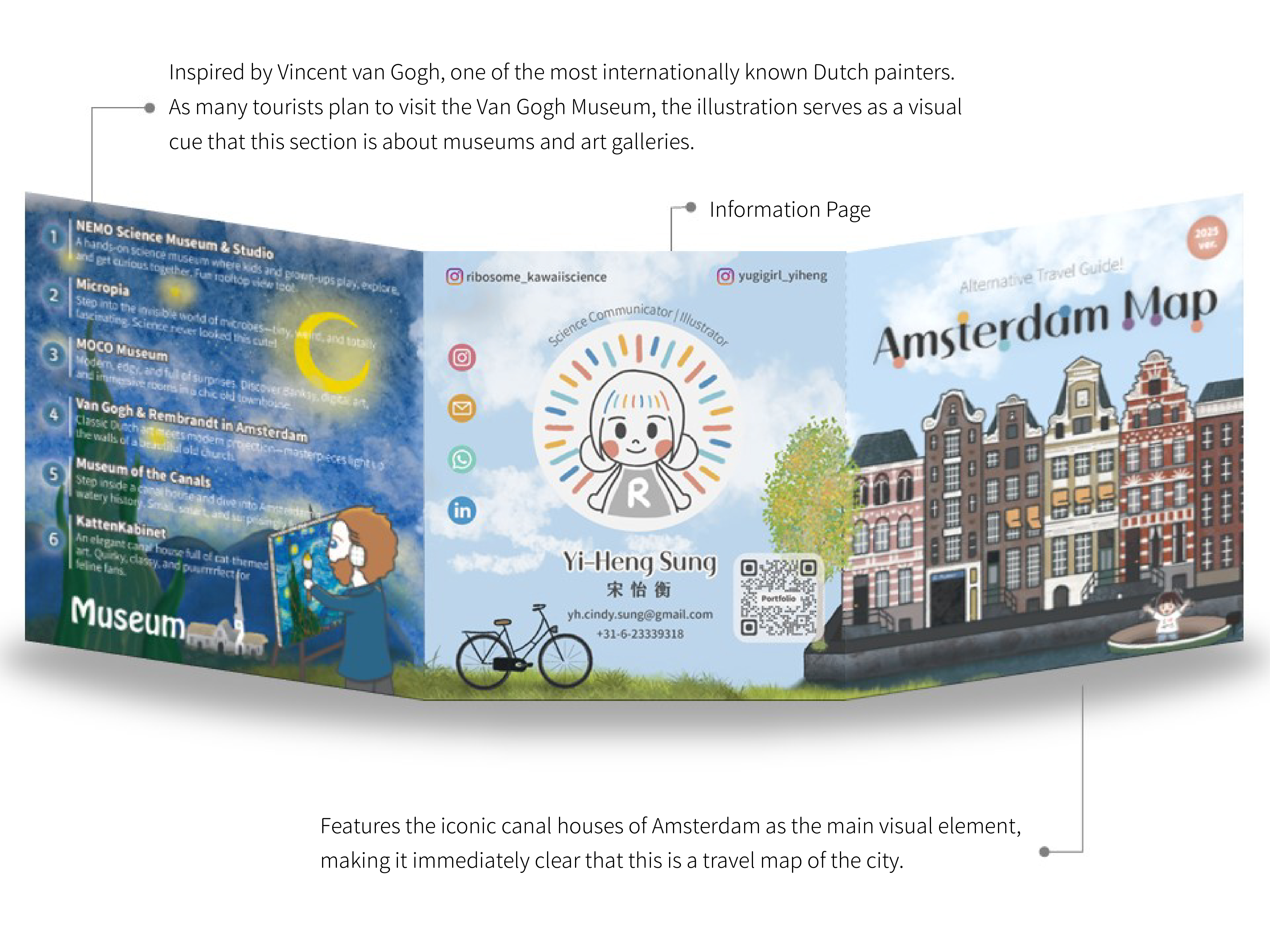
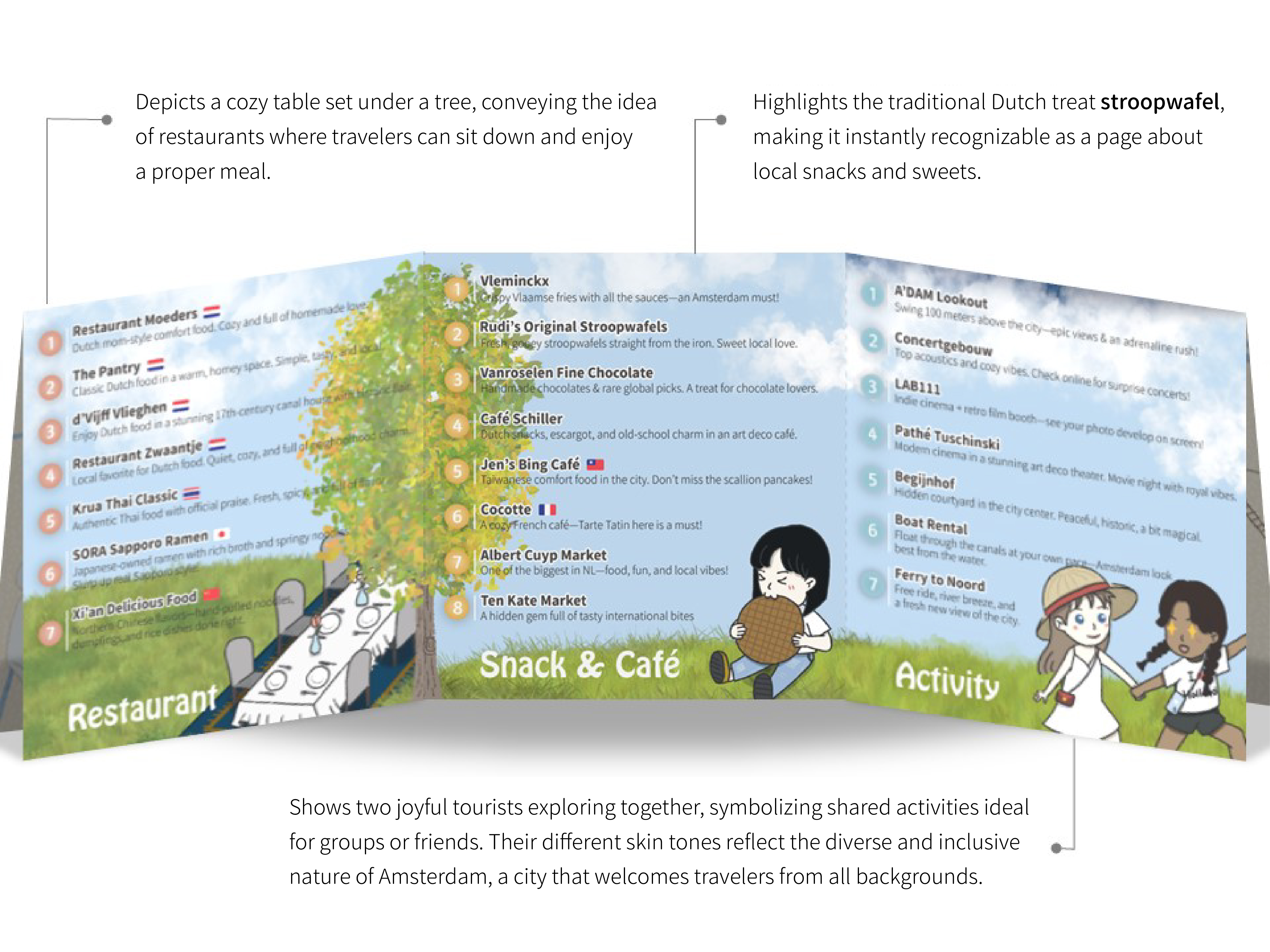
This project began with a focus on Amsterdam, the capital and largest city of the Netherlands, due to its heavy tourist traffic and high demand for localized travel information. To avoid duplicating existing tourist maps, I first analyzed the content of free hotel maps and identified the gaps in information. I then gathered recommendations from local residents to select truly worthwhile restaurants and attractions—avoiding overly commercial or inconsistent options.
I also consulted expats living in the Netherlands, as their insights help filter out tourist traps and strike a balance between taste (some "traditional" flavors may not suit foreign palates) and quality service. In particular, I noticed from interviews and observations that many Asian travelers face challenges adapting to the local food culture—such as cold sandwiches for lunch or a lack of microwave ovens for reheating food bought at supermarkets. Compared to visitors from countries like the UK, Spain, or Germany, the cultural gap in dietary habits between Asians and the Dutch is often more pronounced. To address this, I curated a list of Asian restaurants recommended by true Asian residents in the Netherlands. These places serve warm meals that match Asian taste preferences, offering comfort and familiarity to travelers far from home. At the same time, with Asian cuisine growing increasingly popular in the West, these recommendations can also appeal to non-Asian tourists looking to explore new flavors.
I chose to illustrate the map in a hand-drawn style to stand out from the photo-heavy and often unattractive designs of standard tourist maps. The use of cute and engaging illustrations enhances the map’s visual appeal and makes the travel experience more enjoyable and memorable.
Restaurant and snack selections followed the standards outlined above. For attractions and museums, most of them are personally visited to ensure the reliability and value of each recommendation. To meet diverse traveler needs, I included a wide variety of destinations—some ideal for Instagrammable photos, others perfect for quiet retreats or scenic nature experiences—so that each user can find information tailored to their preferences.
Due to budget constraints, the map has not yet been professionally printed. However, I successfully printed a full-color, foldable version at home and provided the files to a hotel for in-house printing. While I haven’t received direct feedback yet, I plan to observe tourist responses and make improvements before moving forward with mass production.
Looking ahead, I plan to create alternative travel maps for other Dutch cities, allowing tourists to discover places beyond Amsterdam. These maps can also be placed in Amsterdam hotels, encouraging visitors to explore more of the Netherlands. The next city I aim to cover is Utrecht—a charming destination known as the birthplace of Miffy, rich in history and featuring beautiful canals, perfect for those seeking an authentic and lesser-known Dutch experience.
I independently observed a gap in information between tourists and hotel front desk staff and proposed the idea of designing an alternative travel map. This not only highlights my proactive problem-solving mindset but also demonstrates my initiative and ambition. In addition, I gathered feedback from travelers about the common challenges they face in the Netherlands, ensuring that this project addresses real needs and benefits a broader audience.
Based on the specific needs of my target audience, I conducted extensive research—drawing from local recommendations, online resources, and firsthand visits—to carefully select restaurants, attractions, and activities that truly enhance the travel experience and help reduce common frustrations.
Using Procreate and Adobe Illustrator on an iPad, I created all map illustrations to align with each page's theme. This approach enhances both the readability and visual appeal of the map.
I designed the layout in a portable A4 trifold format and tested it using a home printer to ensure practicality and usability for travelers.
I considered the cultural backgrounds and needs of different travelers—for example, Asian tourists who prefer hot meals, and Western visitors who appreciate quiet environments. The content reflects this diversity, offering inclusive and thoughtful recommendations.


Got a thought, a project, or just want to say hi? I’d love to hear from you!