Date Edited

April 30, 2025

Author

Yi Heng Sung

External Communication for Master’s Program Recruitment|Universiteit Utrecht

This communication project was carried out during my six-month internship at the Freudenthal Institute of Utrecht University. The aim was to develop diverse and accessible communication products to help international students gain a comprehensive understanding of both the academic and daily life aspects of the MSEC Master’s program, so they can better assess whether the program suits their needs and expectations.
Project Overview

This project was part of the “Internship Product Development (IPD)” course at Utrecht University, commissioned by the Freudenthal Institute (FI), which focuses on improving science education. FI observed that many international students in the MSEC (Master of Science Education and Communication) program had significant misunderstandings about the course content, educational approach, and the student life in the Netherlands. After enrollment, many international students often expressed that their experiences differed greatly from their initial expectations. This indicates that the information provided on the program’s website may be unclear or incomplete, leading to miscommunication. Therefore, the goal of this project was to apply a systematic and multi-faceted design process to create a clear, targeted communication product. By providing accurate and relevant information, the project aimed to support prospective international students in making well-informed decisions, reducing expectation gaps, and improving overall satisfaction with their studies and life abroad.

Highlighted Skills

#Strategic communication planning #Cross cultural communication design #User centered communication #Project management #Stakeholder engagement #Needs assessment #Content strategy #Digital content creation #Infographic design #Scriptwriting for video #Visual storytelling #Audience analysis #Formative evaluation #Information design #Message framing #Website content planning #Collaboration with institutions #Problem analysis and synthesis #Communication theory application #Creative concept development
Content

This project stands out for its foundation in systematic, theory-driven analysis rather than intuition-based design. The process was divided into two main stages: the analysis phase and the product development phase.

Analysis Phase

Using the framework proposed by Bakker (2017), the project conducted a comprehensive analysis across six dimensions:

  • Problem Analysis: Applying the ASE model (Attitude, Social Influence, Self-Efficacy), the core issue was found to relate to social influence, specifically the impact of cultural and personal experience differences. While international students generally have strong English skills, their interpretations of certain terms are influenced by their cultural background. For instance, the word “learning” may evoke associations with lectures for Asian students, rather than independent study or reading. Additionally, information considered common knowledge in the Dutch context may be entirely unfamiliar to international audiences.
  • Organizational Analysis: This phase examined the mission of the Freudenthal Institute, which aims to advance science and mathematics literacy through research and education. While the MSEC program includes both science education and communication, it leans more heavily towards education, which may be a source of misunderstanding for students expecting a focus on science communication.
  • Aims and desired effects: Using the SMART framework, the project established clear, measurable goals to ensure concrete and feasible results.
  • Conceptual Analysis: Interviews with current international MSEC students were conducted to identify their initial expectations versus actual experiences in three key areas: program content, social life, and daily life. These categories were used to classify and understand common misconceptions.
  • Target Audience Analysis: By reviewing the demographic profiles of current students (which can represent the true worldwide target audience) and conducting in-depth interviews, the project identified preferences for information formats. The findings showed a strong preference for visual content—such as infographics and videos—over text-heavy formats.
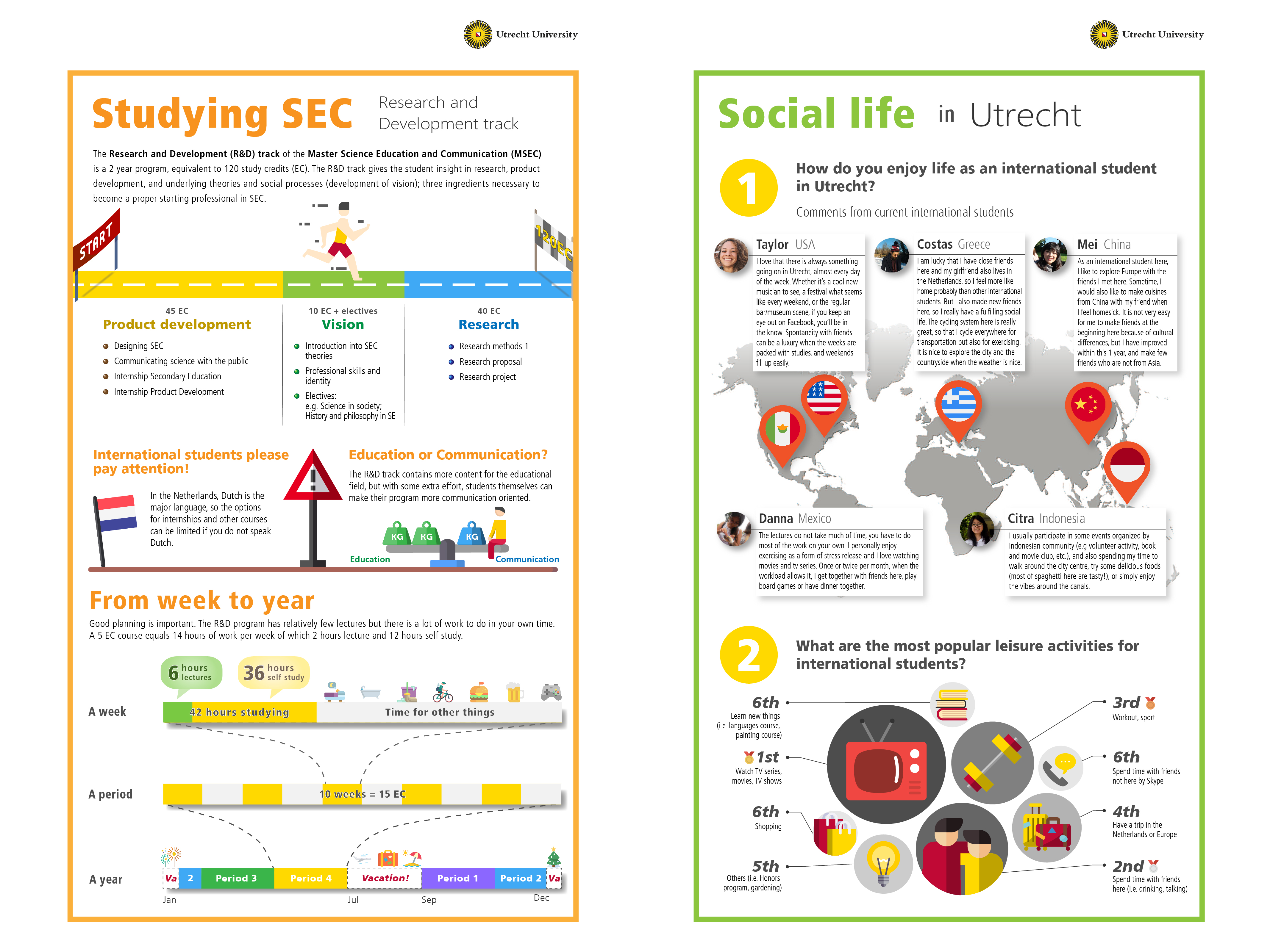
  • Approach analysis: Since international students primarily rely on online resources for program information, the final product was designed in a digital format. By synthesizing insights from the earlier analyses—including semantic differences across cultures, missing content, and user preferences—the final outputs were tailored to be published on the official website: a set of three infographics and one video clip.

Product Development Phase

Based on the analytical findings, the following communication products were developed:

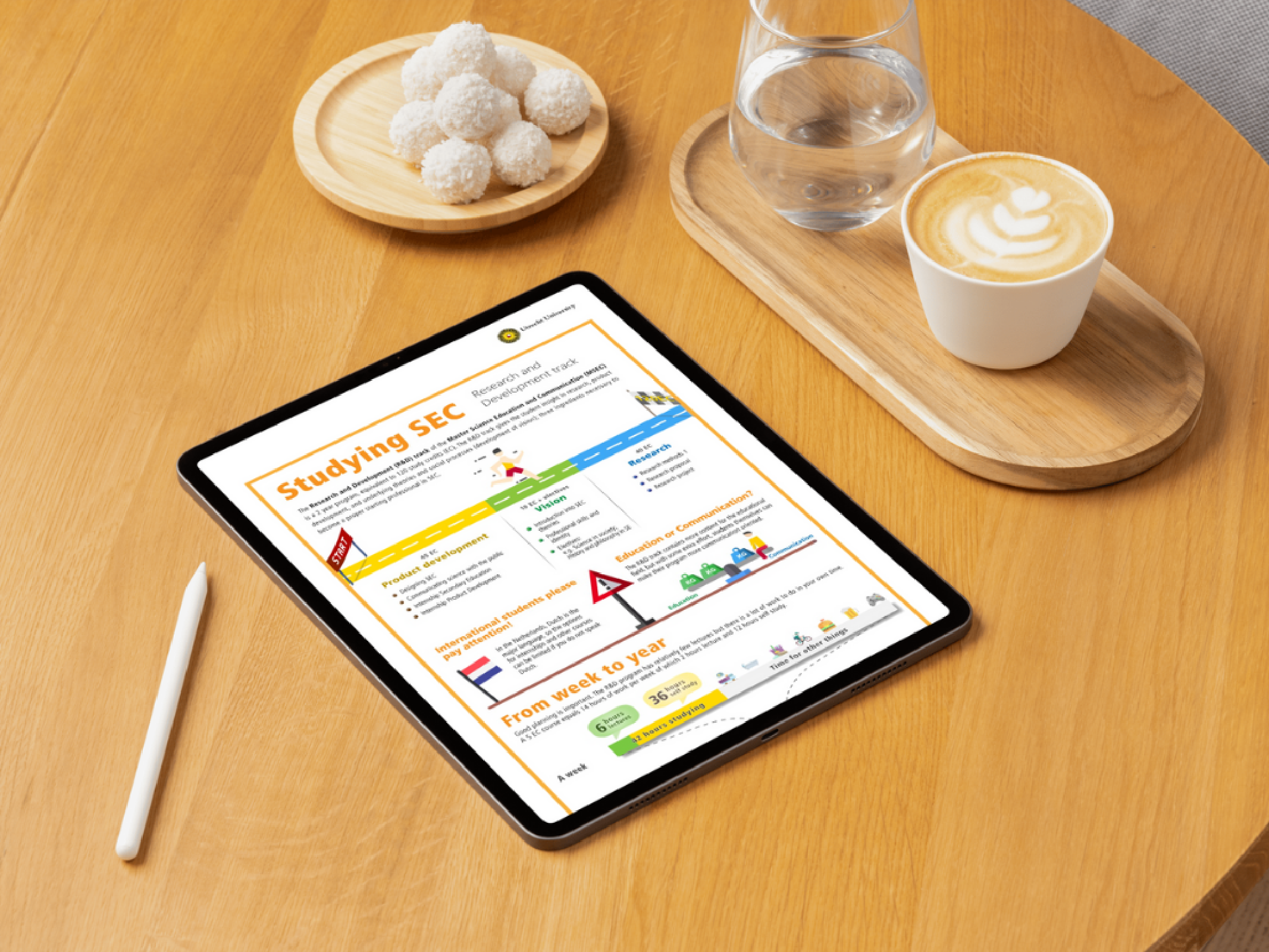
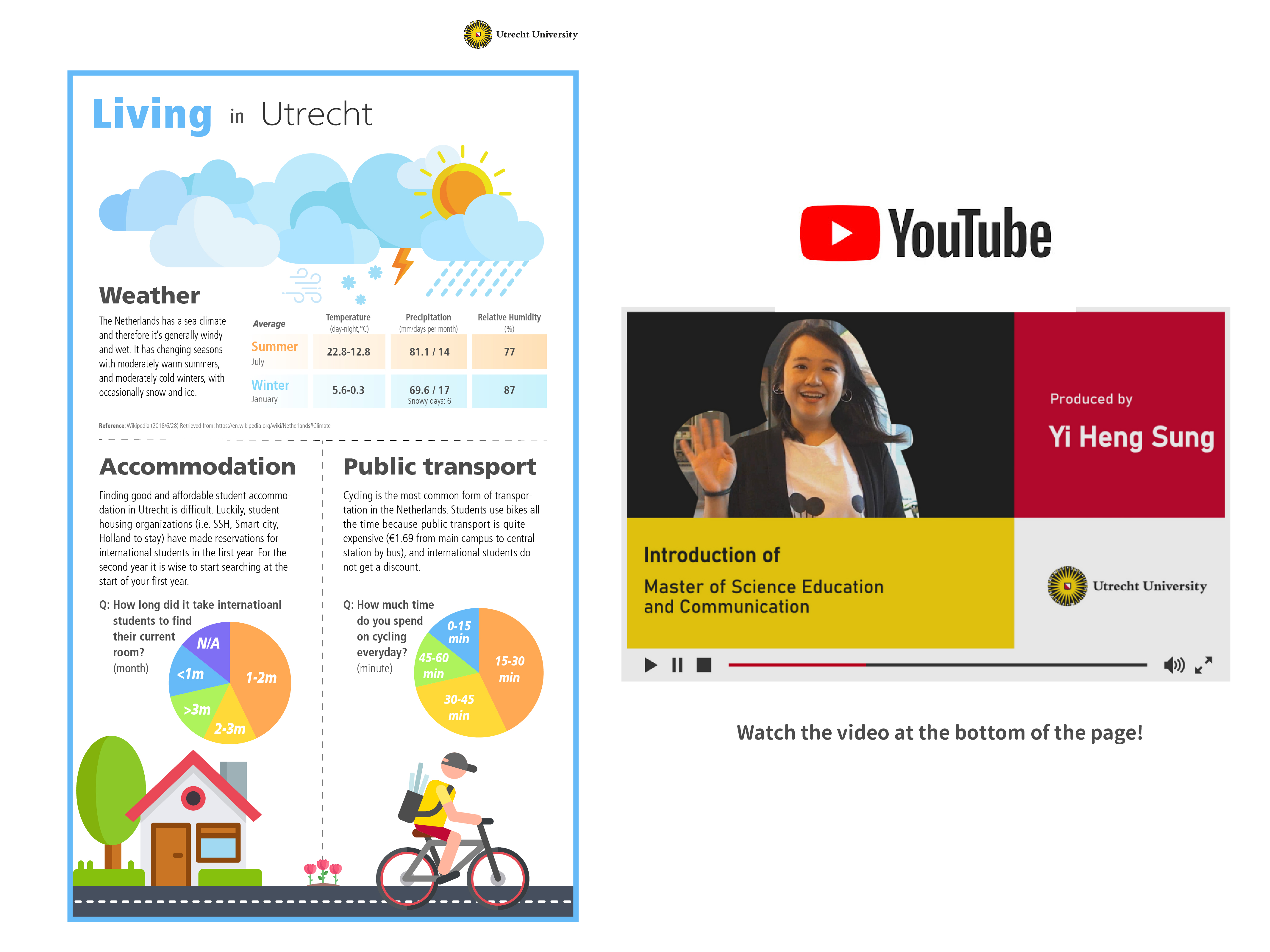
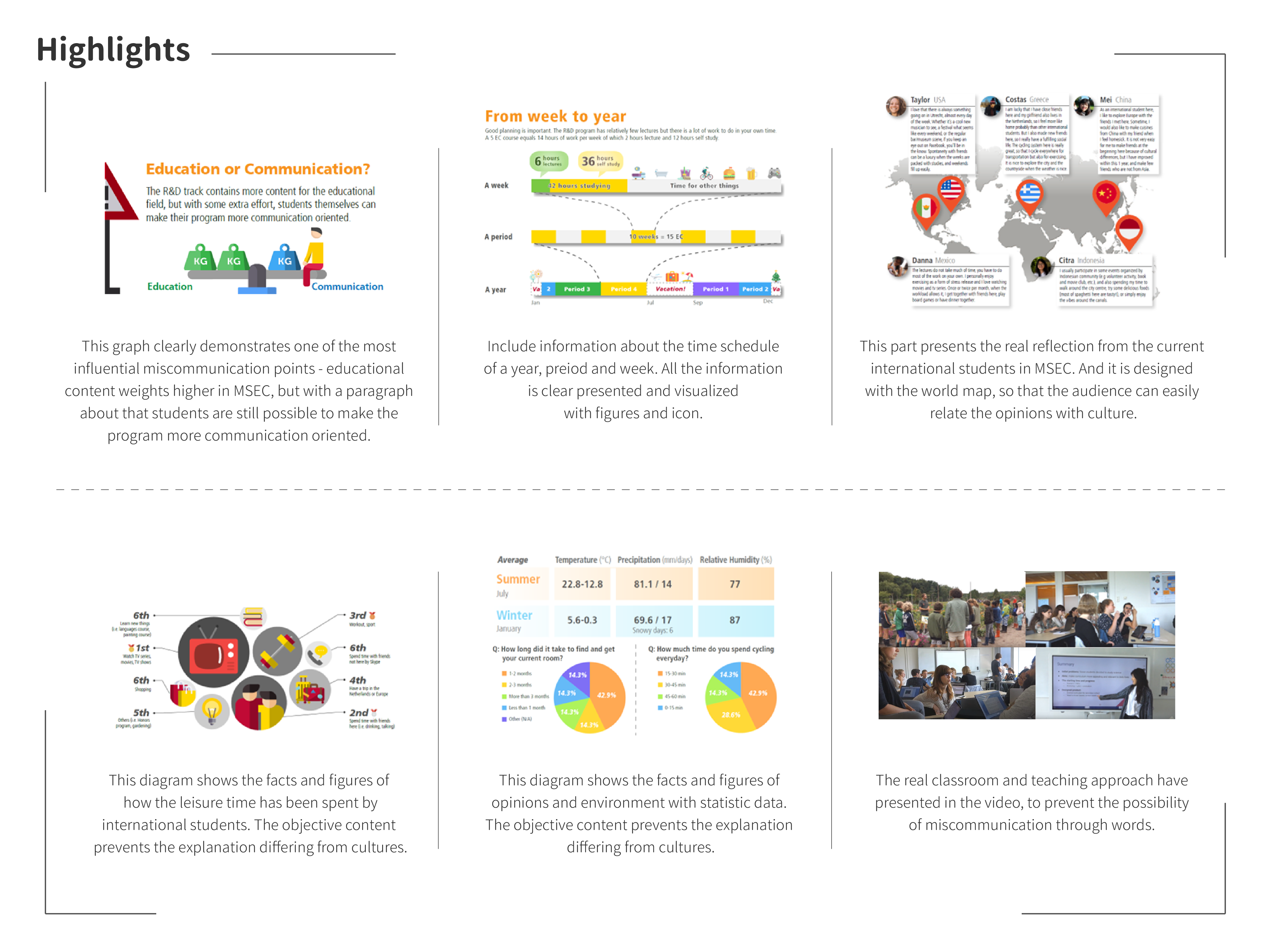
  • Three Infographics: Designed to convey complex information clearly through diagrams and concise text, the infographics addressed the three main areas identified in the research: study program details, social life, and daily life in the Netherlands. The visual layout was structured to match audience preferences for clarity and minimal text.
  • One Video Clip: To reduce the influence of cultural bias in interpreting written content, the video captured real classroom settings, teaching styles, and student interactions within the MSEC program. This visual narrative allows prospective students to form an accurate impression of the learning environment through direct observation, rather than interpretation shaped by cultural expectations.

My Role & Contribution

In this project, I served not only as the designer but also as the planner and executor throughout the entire process—from needs analysis and content planning to the delivery of final products. My contributions can be outlined as follows:

  • Strategized the communication direction through cross-cultural and educational needs analysis.
  • Defined design standards and key messaging based on research findings.
  • Developed three infographics and one video as the core communication materials, along with platform integration and dissemination proposals.
  • Led communication with the Freudenthal Institute to ensure the product aligned with the institutional identity and international students’ expectations.

This project allowed me to fully apply design thinking and science communication theory in practice. It enhanced my ability to integrate research, design, and strategic execution—proving the feasibility and value of culturally adapted communication tools.

Impact & Outcome

The final deliverables—a set of integrated visual and video-based communication tools—effectively addressed the information gap for prospective international students interested in the MSEC program and studying in the Netherlands. I also implemented both formative and planned summative evaluations to strengthen the product’s quality and impact:

  • Formative Evaluation: Throughout the design process, I collected feedback from current international students who were asked to act as if they were prospective students searching for information. Based on their suggestions, I adjusted the product—for example, resizing the “weather” section on the poster and preparing email contacts to connect with current students.
  • Summative Evaluation Plan: I designed an evaluation plan targeting people who have never studied in the Netherlands and are unfamiliar with MSEC. A short questionnaire based on concept analysis would test whether they hold more realistic expectations after viewing the materials. According to the SMART goal I set, the product is deemed successful if over 50% of respondents answer correctly.

This project not only supported the Freudenthal Institute in enhancing the clarity of its communication but also advanced my professional growth in intercultural communication, educational design, and user-centered thinking.

Other Featured Projects

Scientific Writing
Medical Marketing Content Creation | HealthCare Asia
Scientific Writing
【Summary】History of Science|LIS Science Edcuation
Communication Project
Ribosome - Kawaii Science : A platform for science communication
Education project
Narrative Reflection for Enhancing Informal Learning at NEMO Science Museum|NEMO

Want to get in touch?
Drop me a line!

Got a thought, a project, or just want to say hi? I’d love to hear from you!

Thank you! Your submission has been received!
Oops! Something went wrong while submitting the form.