

May 6, 2025
Yi Heng Sung


Visualizing the science behind insulin resistance to support effective health communication and weight management education.
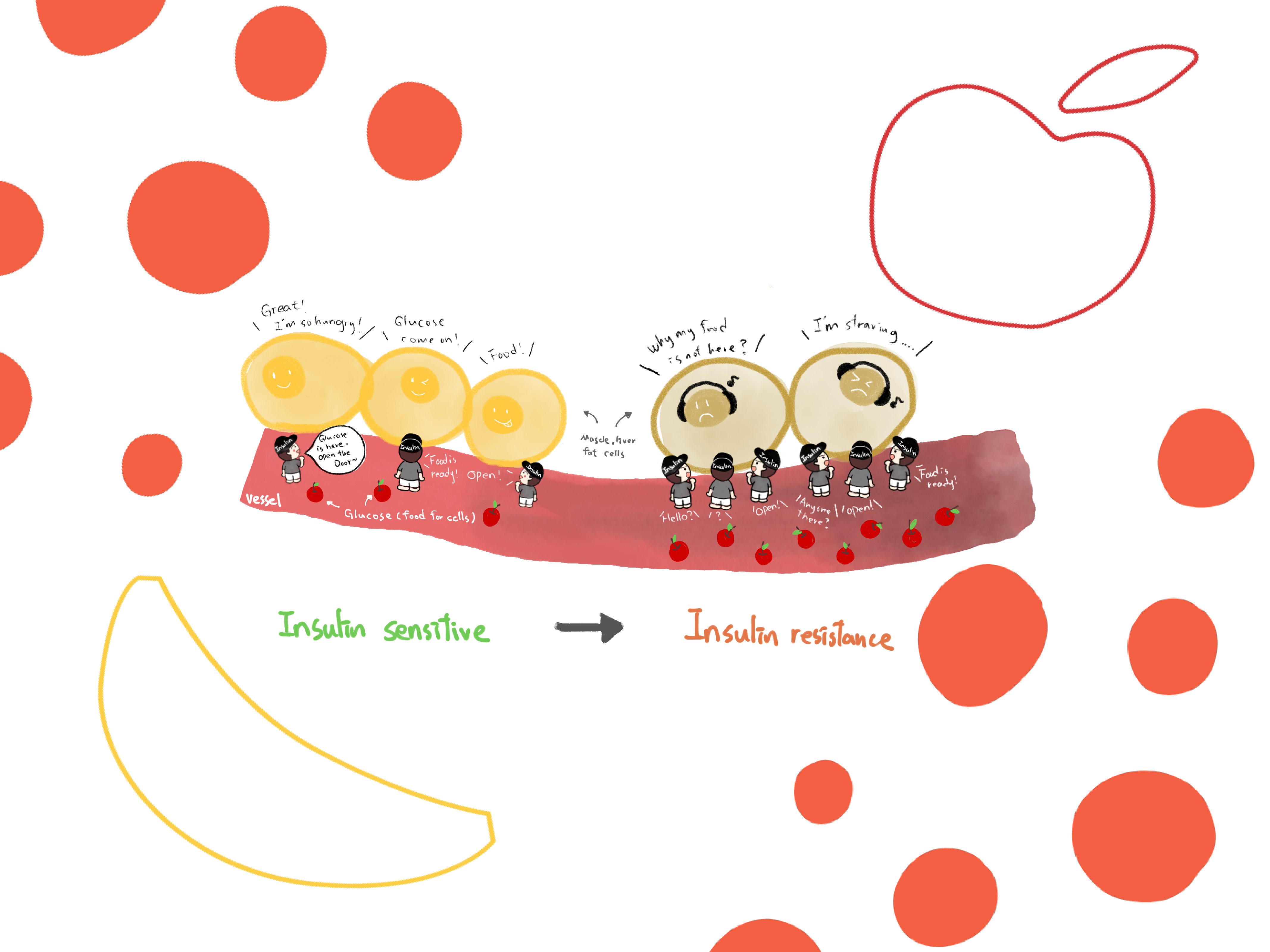
This project was completed during my time as a freelancer and involved creating scientific illustrations for a personal brand focused on the ketogenic diet. The goal was to promote the benefits of low-carb or no-carb ketogenic approaches by helping audiences understand the physiological mechanisms of insulin resistance and its impact on weight loss. The content specifically targeted individuals who struggle with weight management due to insulin resistance, supporting the brand’s effort to communicate its value to this audience.
The core objective of this project was to explain how insulin resistance disrupts the human energy metabolism system and why it makes weight loss more difficult. To answer these questions, I created two science illustrations addressing:
Using anthropomorphism, I illustrated insulin as a food delivery worker and cells as hungry customers at home. Under normal conditions, insulin rings the bell and the cells open the door to receive glucose as an energy source.However, when blood sugar levels remain high over time, the body keeps producing large amounts of insulin. The “delivery workers” start arriving too frequently, annoying the “customers,” who eventually put on headphones to block out the doorbell. This represents how cells gradually become less responsive to insulin—leading to the development of insulin resistance. As a result, glucose and insulin accumulate in the bloodstream, but energy cannot be delivered to its destination.
The second illustration builds on the delivery analogy to further explain how insulin resistance disrupts energy metabolism. Because cells cannot effectively absorb glucose, they remain in a “hungry” state—even when the body has plenty of energy from food. It’s like ordering takeout but never receiving the delivery, prompting the cells to keep placing more orders. This triggers stronger feelings of hunger and drives increased food intake. Additionally, insulin promotes the breakdown of triglycerides in the blood into fatty acids. Unlike glucose, these fatty acids can enter cells freely—like water flowing from a tap. In response to perceived starvation, fat cells “drink up” these fatty acids and store them as fat. This process accelerates fat accumulation, making weight loss even more challenging.
#Science Illustration #Medical Storytelling #Visual Metaphor #Infographic Design #Health Communication #Physiology Concepts #Client Collaboration #Educational Content Creation #Freelance Projects #Knowledge Translation #Scientific Communication #Creative Problem Solving
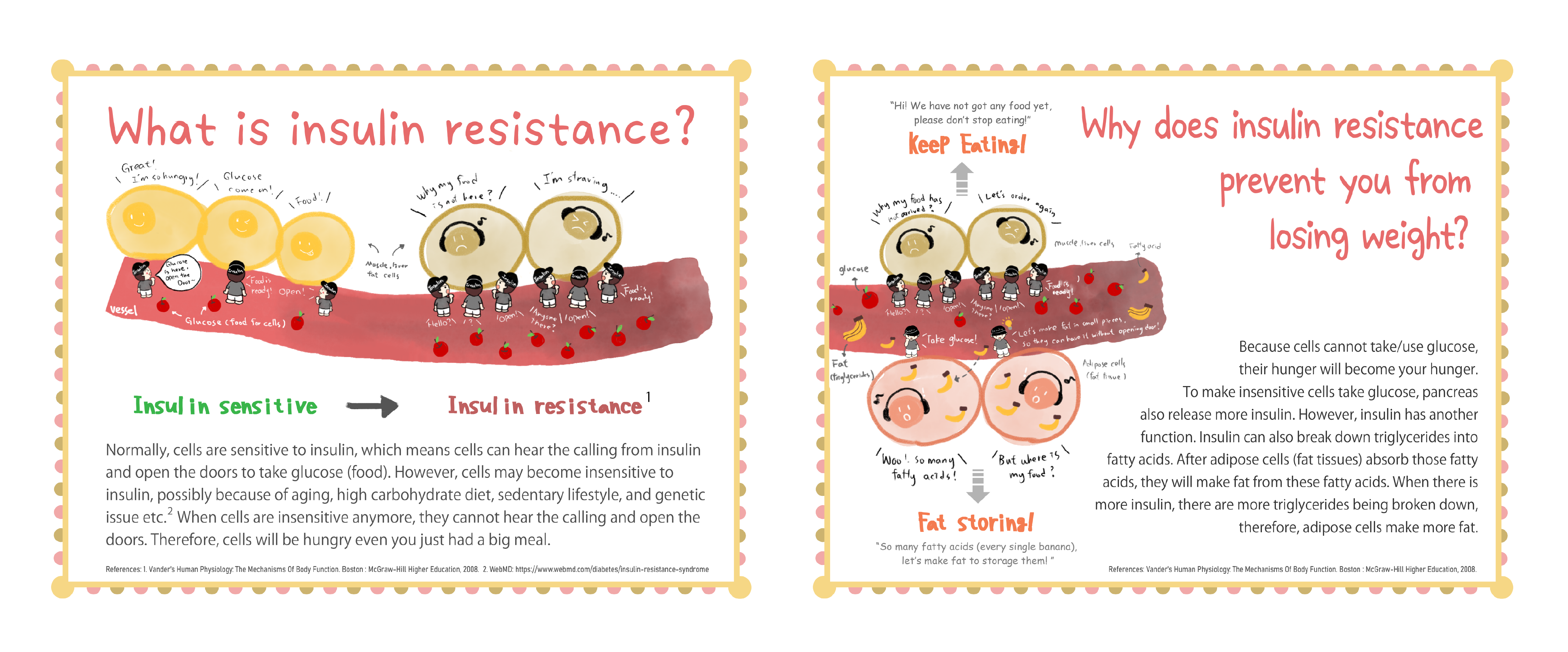

To ensure scientific accuracy, I conducted in-depth research using textbooks and reliable sources on human physiology and metabolism. I thoroughly studied the mechanisms and consequences of insulin resistance, then translated this knowledge into two educational scientific illustrations. Each illustration was accompanied by clear, accessible text to explain complex biological processes to audiences without a medical background.
After delivering the illustrations, I received highly positive feedback from the client. While I was not involved in the final application or distribution of the materials, the project successfully helped the client communicate the core scientific concepts of insulin resistance and its impact on weight management. It also enhanced the credibility and clarity of their brand messaging.



Got a thought, a project, or just want to say hi? I’d love to hear from you!